
What is Swiss CNC?
Swiss-style CNC turning is a manufacturing process designed for producing small, precise parts at scale using long, bar-fed material. Instead of loading individual parts by hand, Swiss machines automatically feed continuous bar stock through the machine, allowing parts to be machined, cut off, and ejected without constant operator involvement. This built-in automation reduces handling, improves consistency, and lowers labor cost compared to conventional turning methods.
Accuracy is maintained through a sliding headstock and guide bushing that support the material directly at the cutting point. This minimizes deflection and allows long or slender parts to be machined with excellent stability and repeatability, even at higher production rates.
Why choose Swiss-style CNC Machining?
Swiss turning fundamentally changes how parts are produced by machining directly from long, bar-fed stock rather than individual blanks. Once a process is set up and validated, material advances automatically through the guide bushing as features are completed, enabling continuous, repeatable production with minimal operator intervention.
In a Swiss turning environment, a single operator can tend multiple machines while performing inspection, monitoring tool wear, and replenishing bar stock. This higher level of automation significantly reduces labor cost per part while maintaining tight tolerances and consistent quality.
Combined with simultaneous front and back working, multi-axis milling in a single setup, and reduced secondary operations, Swiss turning delivers both technical precision and economic efficiency. For customers, this means more consistent parts, tighter tolerances, and lower total cost for repeat production compared to conventional turning approaches.
Our Equipment
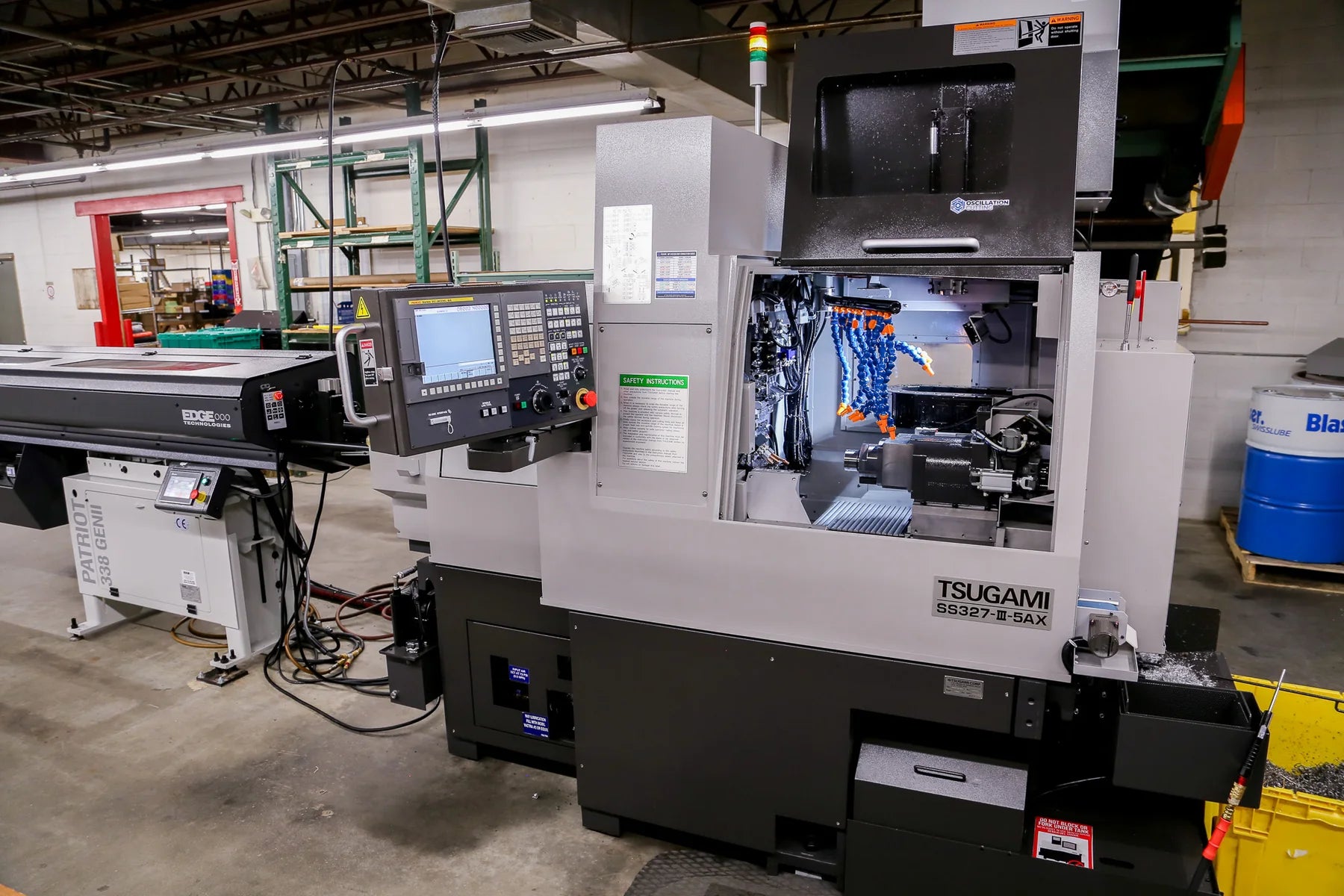
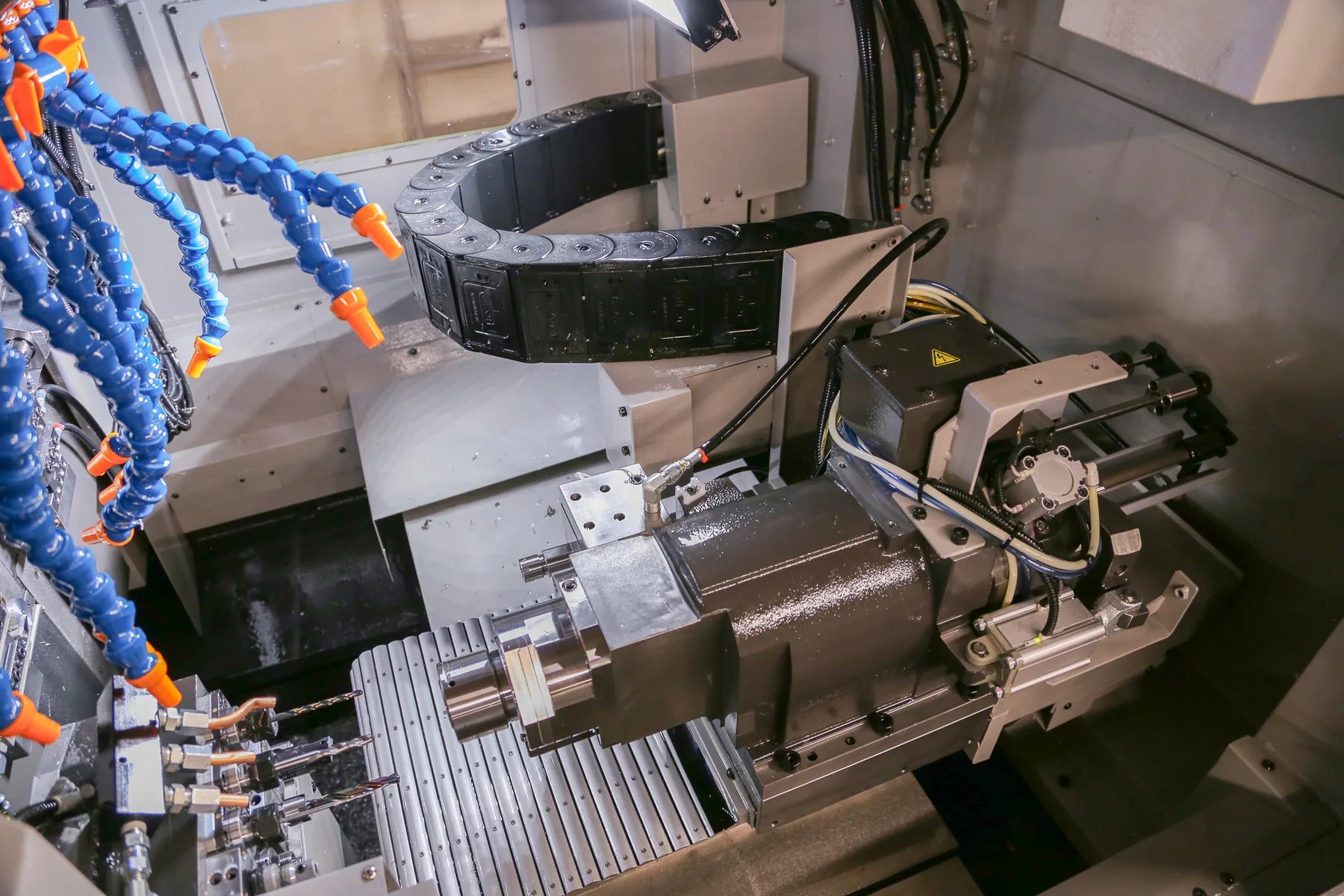
Our first machine is a Tsugami SS327-III-5AX. It's really two lathes in one, with a main spindle and back spindle that operate simultaneously.
The back spindle picks off parts from the main spindle and creates features on the back-side while the main spindle begins the next part.
Key capabilities include:
-
Bar capacity: Up to 32 mm diameter (1.26 in)
-
Multi-axis machining: Simultaneous turning and milling in a single cycle
-
Main and back-spindle operation: Front and back working with parallel processing
-
B-axis capability: Angled milling, swarf cuts, sculpted surfaces, and compound geometries
-
High tool capacity: Supports complex parts without tool changes mid-cycle
-
Lights-out stability: Designed for unattended operation with predictable tool life
The combination of main and back-spindle handoff allows one part to be machined while the next begins simultaneously, improving throughput while maintaining consistent quality.
Ideal Parts
Swiss turning excels at parts where precision, geometry, and surface finish matter.
Typical applications include:
-
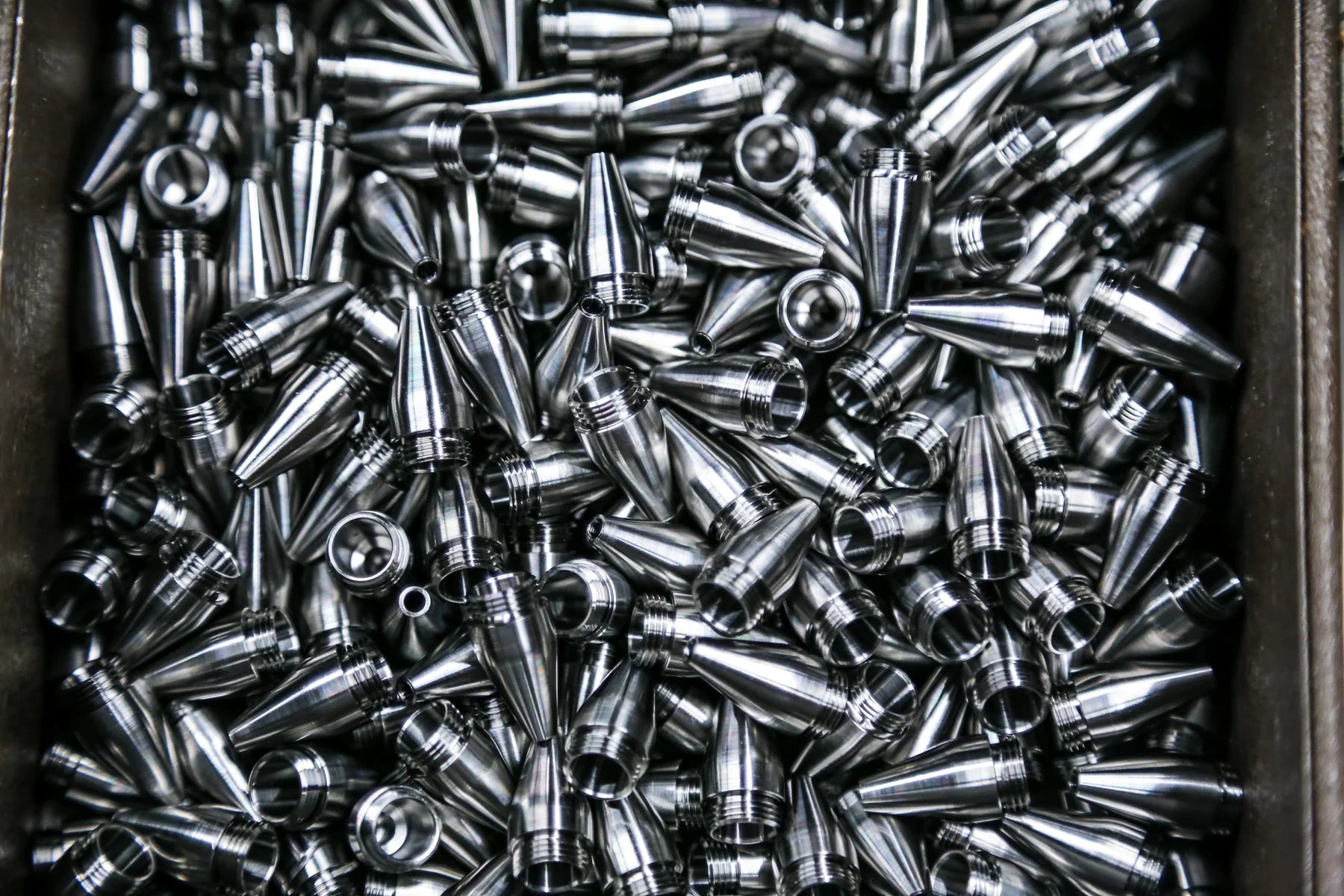
Pins, shafts, and precision fasteners
-
Bushings, spacers, and bearing surfaces
-
Plugs, fittings, and fluid-handling components
-
Journals, stepped diameters, and tight concentric features
-
Cross holes, milled flats, slots, and compound features
-
O-ring grooves, sealing surfaces, and more!
Materials
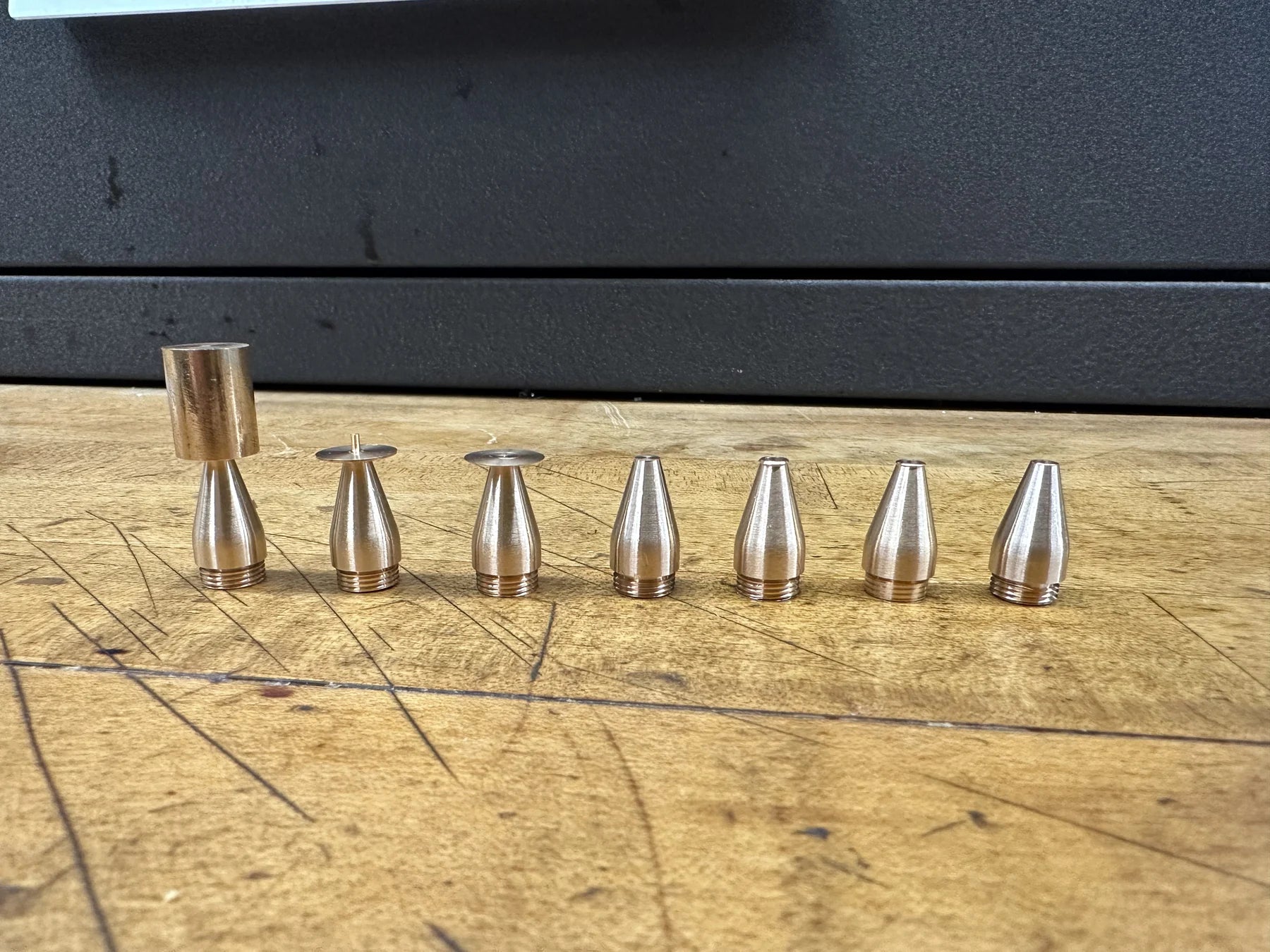
We can machine a range of alloys commonly used in performance-driven applications such as stainless steels (303/304/316/17-4PH), Aluminum, Titanium, Copper, Brass and more.
Our machine is equipped with high pressure coolant up to 2000psi which blasts chips away and ensures a high level of uptime.
Process Control and DFM
Every project begins with 3D simulation and toolpath validation in ESPRIT to verify geometry, clearances, and machining strategy before cutting material. We provide design-for-manufacturing feedback early in the process to help identify opportunities to simplify features, improve yield, or reduce cycle time.
During production, we monitor tool wear, perform in-process checks, and maintain documented setups to ensure repeatability across runs. This approach supports both early-stage builds and repeat production where consistency matters.
Once a process is validated, our Swiss turning workflow is well suited for stable, repeatable production with minimal operator intervention.
Let’s Talk About Your Parts
If you’re evaluating Swiss turning for a new component or looking to improve an existing design, we’re happy to review your prints and requirements. We offer a complimentary design and manufacturability review and are fully comfortable working under NDA when needed.
Contact us to discuss your part, tolerances, and timeline, and we’ll determine whether there’s a mutual fit to support your manufacturing needs.